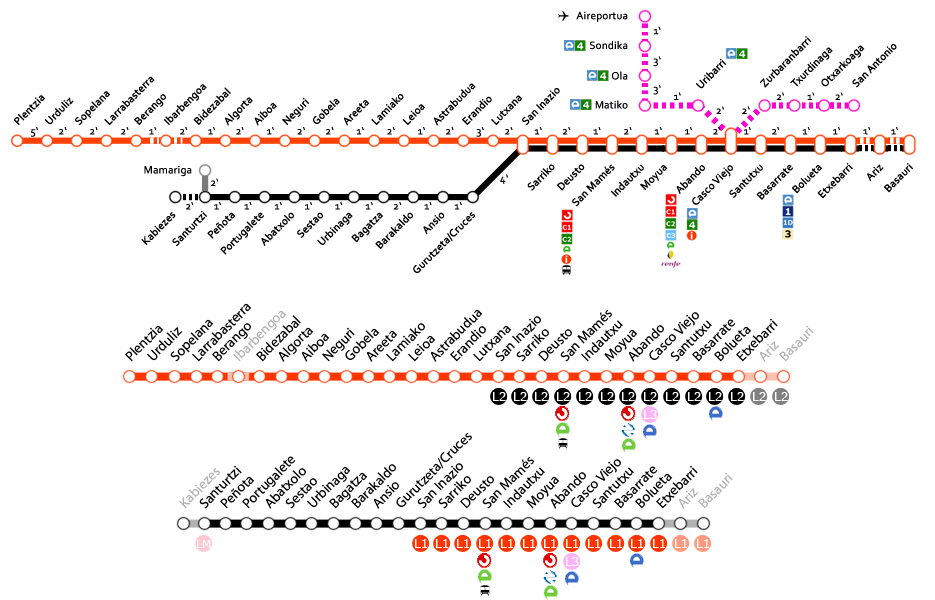
Bilbao Metro (Metro Bilbao) is the underground rapid transit system of Bilbao, in Spain's Basque Country. Operated by Metro Bilbao S.A. and owned by the Consorcio de Transportes de Bizkaia (CTB), the network has 2 lines, 39 stations and 41 km of track. Opened on 11 November 1995, its iconic glass-tube station entrances — known as Fosteritos after their designer, architect Sir Norman Foster — have become the most recognisable symbol of the city and a landmark of contemporary European design.
A single journey costs from €0.95 (Creditrans fare, zone 1, with Barik card). Service runs Monday–Thursday and Sunday 6:00–23:00, extended to 02:00 on Fridays, Saturdays and eve-of-holiday nights. The metro is fully integrated with Bilbobus, Bizkaibus, Euskotren and Renfe Cercanías via the Barik card.
Bilbao Metro — Complete Guide 2026
| Bilbao Metro — key facts 2026 | |
|---|---|
| Lines | 2 (Line 1 and Line 2) |
| Stations | 39 |
| Route length | 41.01 km |
| Opened | 11 November 1995 |
| Last expansion | Kabiezes (Line 2), 28 June 2014 |
| Operator | Metro Bilbao S.A. |
| Owner | Consorcio de Transportes de Bizkaia (CTB) |
| Hours | Mon–Thu & Sun: 6:00–23:00 · Fri, Sat & eve-holidays: 6:00–02:00 |
| Peak frequency | every 5–7 min |
| Basic fare | from €0.95 (Creditrans, zone 1) |
| Official website | metrobilbao.eus |
| CTB fares | ctb.eus |
What is Bilbao Metro? The Fosteritos
Bilbao Metro is the underground rapid transit system serving Bilbao and the Greater Bilbao metropolitan area. It was born as part of the urban transformation that turned Bilbao — a declining industrial city — into a global benchmark for urban regeneration. The so-called Bilbao effect was driven by the 1997 opening of the Guggenheim Museum and the renewal of the Abandoibarra riverside district.
The network's defining feature is the Fosteritos: the station entrances shaped as illuminated glass-tube arches rising from the pavement, designed by British architect Sir Norman Foster. Their transparency, integration with the urban fabric and distinctive form have earned multiple international design awards and, in 2025, heritage protection status from the Basque Government. The metro's logo was designed by German graphic designer Otl Aicher, also known for the Munich 1972 Olympic pictograms.
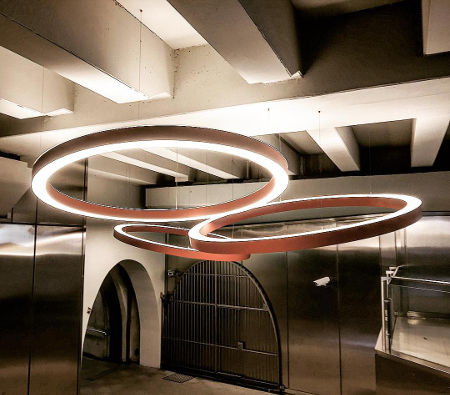 Bilbao Metro station — the Fosterito glass-tube entrance designed by Sir Norman Foster
History of Bilbao Metro
Plans for a metro in Bilbao date back to the 1920s, when the rapid industrial growth along the Nervión river estuary called for fast mass transit. The project was postponed for decades due to funding shortfalls and political disagreements. It was not until 1977 that the regional government revived the proposal, and formal approval for construction came in 1987.
Works began in 1988 under the direction of Sir Norman Foster's studio, which was responsible for the design of the tunnels and stations. On 11 November 1995, Line 1 was inaugurated with Moyua as the opening station. Gobela and Casco Viejo opened in 1996; Santutxu, Bolueta and Basarrate in 1997, the same year Line 2 began construction. Line 2 opened on 13 April 2002. The last expansion was the Kabiezes station, opened on 28 June 2014, extending Line 2 south into the Left Bank industrial area.
Lines and stations
Bilbao Metro has 2 lines that share the central tunnel under the Bilbao city core. Line 1 runs from the eastern end (Etxebarri) along the northern Getxo coast to Plentzia. Line 2 connects the eastern end (Basauri) with the Left Bank of the Nervión (Kabiezes), with a branch to Mamariga.
| Line | Route | Termini |
|---|---|---|
| L1 | Etxebarri ↔ Plentzia (Getxo coast) | Etxebarri · Plentzia |
| L2 | Basauri ↔ Kabiezes / Mamariga (Left Bank) | Basauri · Kabiezes · Mamariga |
Line 1 stations (Etxebarri → Plentzia)
| # | Station | Connections |
|---|---|---|
| 1 | Etxebarri | L1 · L2 |
| 2 | Astrabudua | |
| 3 | Erandio | |
| 4 | Lutxana | |
| 5 | Areeta | |
| 6 | Leioa | |
| 7 | Lamiako | |
| 8 | Aiboa | |
| 9 | Gobela | |
| 10 | Neguri | |
| 11 | Bidezabal | |
| 12 | Algorta | |
| 13 | Sopelana | |
| 14 | Berango | |
| 15 | Larrabasterra | |
| 16 | Urduliz | |
| 17 | Basarrate | L1 · L2 |
| 18 | Bolueta | L1 · L2 |
| 19 | Santutxu | L1 · L2 |
| 20 | Casco Viejo | L1 · L2 · Euskotren Trena |
| 21 | Abando | L1 · L2 |
| 22 | Moyua | L1 · L2 |
| 23 | Indautxu | L1 · L2 |
| 24 | San Mamés | L1 · L2 · Renfe Cercanías · Euskotren Tranbia |
| 25 | Deusto | L1 · L2 |
| 26 | San Inazio | L1 · L2 |
| 27 | Sarriko | L1 · L2 |
| 28 | Plentzia | L1 terminal |
Line 2 exclusive stations (Basauri ↔ Kabiezes + Mamariga branch)
| # | Station | Connections |
|---|---|---|
| 1 | Basauri | L2 terminal · Renfe Cercanías |
| 2 | Ansio | |
| 3 | Ariz | |
| 4 | Gurutzeta/Cruces | Cruces Hospital |
| 5 | Urbinaga | |
| 6 | Barakaldo | |
| 7 | Sestao | |
| 8 | Bagatza | |
| 9 | Peñota | |
| 10 | Abatxolo | |
| 11 | Santurtzi | Mamariga branch |
| — | Mamariga | branch terminal |
| 12 | Kabiezes | L2 terminal (since 2014) |
Central stations (Etxebarri–Sarriko) are shared by both lines. Check the official map: metrobilbao.eus.
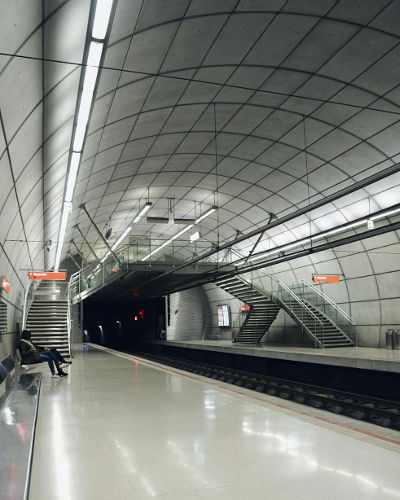 Inside a Bilbao Metro station
Bilbao Metro fares 2026
Fares are set by the Consorcio de Transportes de Bizkaia (CTB). In March 2026, updated fares came into effect. Prices vary by number of zones and ticket type.
Occasional tickets (without Barik card)
| Ticket | 1 Zone | 2 Zones | 3 Zones | Validity |
|---|---|---|---|---|
| Single (Ocasional) | ~€1.60 | ~€1.80 | ~€1.85 | 2 hours |
| Return (Regreso) | ~€3.20 | ~€3.60 | ~€3.70 | 2 hours |
| Day ticket | ~€4.90 | 1 day | ||
Creditrans fare (with Barik card)
| Ticket | 1 Zone | 2 Zones | 3 Zones | Use |
|---|---|---|---|---|
| Creditrans | ~€0.95 | ~€1.13 | ~€1.25 | up to 10 people |
| Hirukotrans (large families) | from ~€0.76 | from ~€0.91 | from ~€0.99 | 1 person |
| Gizatrans (65+ / disability) | ~€0.35 | 1 person | ||
Estimated prices. Barik card requires validation at both entry and exit. Confirm at ctb.eus.
Monthly and annual passes
| Pass | 1 Zone | 2 Zones | 3 Zones |
|---|---|---|---|
| Super 50 (50 trips/month) | ~€32 | ~€38 | ~€42 |
| Monthly (unlimited) | ~€37 | ~€44 | ~€50 |
| Gazte (<26, monthly) | ~€30 | ~€36 | ~€41 |
| Juventud (<26, annual) | ~€236 | ~€273 | ~€315 |
The Barik card
The Barik card is the rechargeable smart card for all public transport in Bizkaia: Bilbao Metro, Bilbobus, Bizkaibus, Euskotren, Renfe Cercanías and Bilbao Tram. Also valid on the Artxanda Funicular, Ereaga lift, Bizkaia Bridge and bike-sharing services.
- Creditrans Barik (anonymous): up to 10 simultaneous validations — ideal for groups.
- Kide Barik (personalised): monthly passes and large-family discounts. Requires ID and photo.
- Giza Barik (personalised, reduced mobility): disability discounts ≥33%. Certificate required.
- Gazte / Juventud Barik: monthly or annual pass for under-26s in Bizkaia.
Important: validate the Barik card at both entry and exit. Missing tap-out triggers maximum fare. Top up online at barik.net.
Hours and frequency
| Day | First train | Last train | Peak frequency |
|---|---|---|---|
| Monday–Thursday | 06:00 | ~23:00 | every 5–7 min |
| Friday & eve-holidays | 06:00 | ~02:00 (next morning) | every 5–7 min |
| Saturday | 06:00 | ~02:00 (next morning) | every 10 min |
| Sunday & holidays | 06:00 | ~23:00 | every 10–20 min |
Getting to Bilbao Airport
Bilbao Metro does not serve Bilbao Airport (BIO) directly. Best option:
- Metro to San Mamés (L1/L2).
- Walk to Termibus bus station and take Bizkaibus A3247 to the airport.
- Journey time: approximately 30–40 minutes by bus.
Taxi from city centre: approximately €25–35, 20–30 minutes.
Accessibility
All stations have lifts and ramps for universal access. Trains have wheelchair spaces, tactile paving and audio announcements. Giza Barik cardholders with ≥33% certified disability qualify for the Gizatrans reduced fare (≈€0.35).
Rules
- No eating, drinking or smoking on the metro system.
- Children under 4: free with proof of age.
- Pets: in a carrier under 8 kg. Guide dogs: unrestricted.
- Escalators: stand right, walk left.
- Priority zones: first and last carriage (elderly, pregnant, wheelchair, pushchairs).
- Validate Barik card at entry AND exit.
Tourist highlights by metro
- Guggenheim Museum — Moyua station, 11 min walk. Frank Gehry's landmark building.
- Casco Viejo (Old Town) — Casco Viejo station. Ribera Market (Europe's largest covered market), Cathedral of Santiago.
- Bilbao Fine Arts Museum — Moyua station, 7 min walk. El Greco, Goya, Zurbarán, Basque art.
- Bizkaia Bridge (Puente Colgante) — Areeta station (L1). UNESCO World Heritage, world's oldest transporter bridge (1893).
- Getxo & Sopelana beaches — Algorta, Sopelana stations (L1). Bay of Biscay, 30 min from city centre.
- Abandoibarra — Abando/San Mamés stations. Regenerated riverfront; Euskalduna Concert Hall, Torre Iberdrola.
Curiosities
- The Fosteritos: Sir Norman Foster's glass-tube station entrances. Heritage-listed by the Basque Government in 2025.
- Ghost station of Ibarbengoa: built in the 1990s between Sopelana and Berango, never opened. Line 1 trains pass through it without stopping — visible from carriages.
- Otl Aicher's logo: German graphic designer Otl Aicher (Munich 1972 Olympics pictograms) created the Metro Bilbao logo — one of his last major projects before his death in 1991.
- The Bilbao effect: term used in urban planning to describe city regeneration via major cultural projects, coined from Bilbao's own transformation in the mid-1990s.
Future expansions
The master plan includes Lines 3, 4 and 5, with new stations in Rekalde, Matiko and Basurto. As of May 2026, no confirmed start date exists for any of these. Line 3 (linking city centre with the airport via Basauri) has been postponed multiple times since the 2000s.
FAQ — Bilbao Metro
How much does a Bilbao Metro ticket cost in 2026?
With a Barik Creditrans card: ~€0.95 (zone 1), ~€1.13 (2 zones), ~€1.25 (3 zones). Without Barik: ~€1.60 single (zone 1). Day ticket: ~€4.90. Fares updated March 2026 — verify at ctb.eus.
What are the opening hours of Bilbao Metro?
Daily from 6:00. Last trains: ~23:00 Mon–Thu and Sun; ~02:00 (next morning) Fri, Sat and eves-of-holidays.
How do I get to Bilbao Airport from the metro?
No direct metro connection. Take the metro to San Mamés, then Bizkaibus A3247 from Termibus (~30–40 min to airport). Taxi: ~€25–35.
What are the Fosteritos?
Illuminated glass-tube station entrances designed by Sir Norman Foster. Bilbao's most photographed landmark; heritage-listed by the Basque Government in 2025.
How many lines does Bilbao Metro have?
2 lines. Line 1: Etxebarri to Plentzia (Getxo coast). Line 2: Basauri to Kabiezes + Mamariga branch (Left Bank). Both share the central city section. Total: 39 stations, 41 km.
Update history
- May 2026 — Full rewrite: data corrections, March 2026 fares, station list corrected, FEVE → Renfe Cercanías, hours corrected, Fosteritos/Ibarbengoa/Barik added, JSON-LD schema, 11 languages.
- February 2017 — General content update.
- February 2011 — Article created.