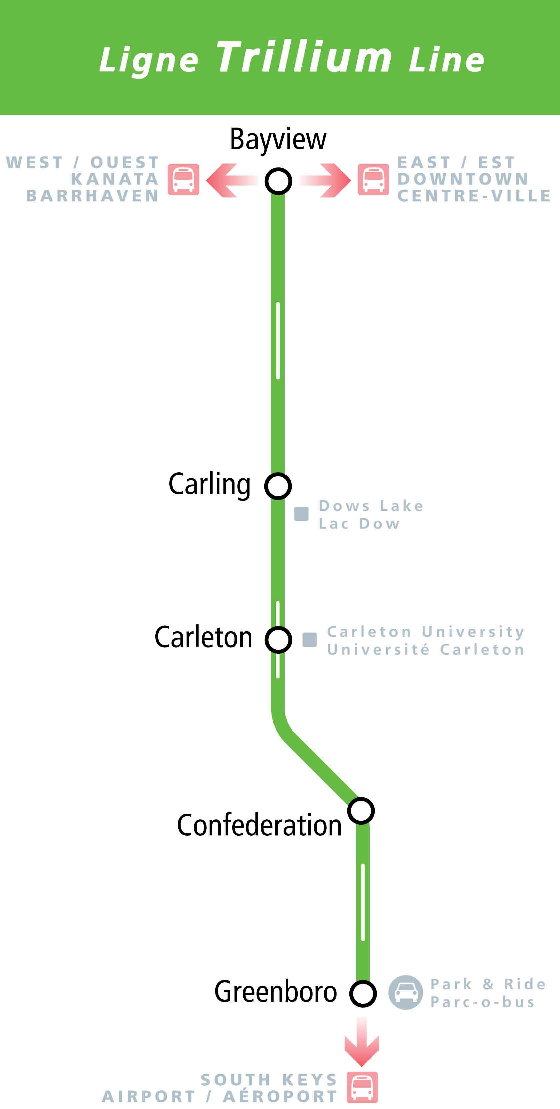
The Ottawa O-Train is the urban rail network of Canada's capital, operated by OC Transpo. It runs 3 active lines: Line 1 (Confederation Line), an electric light metro crossing downtown through a deep underground tunnel; Line 2 (Trillium Line), a diesel light rail running north-south; and Line 4, a direct link to Ottawa Macdonald-Cartier International Airport.
The network currently spans over 35 km with around 27 stations. A massive Stage 2 expansion under construction will add 16 more stations by 2027. Payment is by Presto card or cash; a single adult fare is approximately $3.80 CAD with Presto .
The most useful station for tourists is Rideau — the system's deepest station — giving direct access to the ByWard Market, Rideau Centre and historic downtown. Parliament serves Parliament Hill. For the airport, Line 4 connects from South Keys.
Ottawa O-Train
For decades, Ottawa was internationally renowned in urban transport circles for a slightly unusual reason: it was the world capital of BRT. While other cities built subways and trams, Ottawa doubled down on the Transitway — a network of dedicated bus rapid transit lanes — and for a long time it worked remarkably well. But urban growth eventually pushed that model to its limits, and in the late 2000s the city embarked on one of the most ambitious and contentious infrastructure projects in recent Canadian history: transforming Ottawa into a rail city.
The result is today's O-Train: a three-line network with different technologies, an underground tunnel beneath downtown, a direct airport connection, and a massive expansion still under construction. A system that opened in 2019 amid great expectations, then spent several years fighting derailments, axle bearing failures, extended closures, and a public inquiry that produced one of the most damning reports on infrastructure management in Canadian history. And yet, despite all that, remains the future of transit in Ottawa and one of the most instructive rail systems in North America for anyone paying attention.
For visitors, the O-Train is perfectly functional and very useful for getting around the city centre. For urbanists or rail enthusiasts, it is an extraordinary case study. For Ottawa, it is simply essential.
Key system facts
| Fact | Information |
|---|---|
| Official name | Ottawa O-Train |
| Operator | OC Transpo (City of Ottawa) |
| System type | Electric light rail (Line 1) + Diesel light rail (Lines 2 and 4) |
| Active lines | 3 (Line 1 Confederation, Line 2 Trillium, Line 4 Airport) |
| Active stations | ~27 |
| Total length | ~35.5 km |
| Original opening | October 15, 2001 (Trillium Line) |
| Line 1 opening | September 14, 2019 |
| Line 4 opening | January 6, 2025 |
| Ridership | ~81,300 weekday boardings (Q4 2025); 26.5 million annually (2025) |
| Rolling stock | Alstom Citadis Spirit (Line 1) — Stadler FLIRT DMU (Lines 2 and 4) |
| Maximum operating speed | 80 km/h (Line 1) |
| Track gauge | 1,435 mm (standard gauge) |
| Payment | Presto card / cash |
| Single fare (Presto) | ~$3.80 CAD |
| Monthly pass | ~$134 CAD |
| Airport connection | Yes, Line 4 (transfer at South Keys) |
| Official website | octranspo.com |
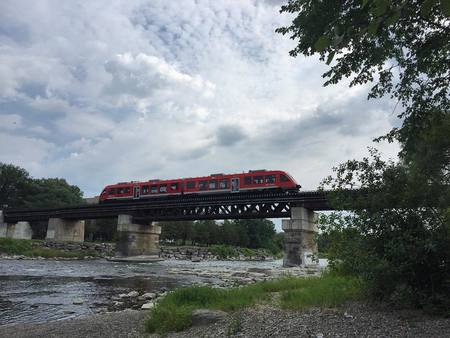 Vincent Massey Park, near the Trillium Line corridor
What makes the O-Train special
The O-Train is not just another light rail system. Four things make it genuinely distinct in the North American context:
1. Ottawa went from the world's BRT capital to a rail city. For decades, Ottawa was an international showcase for what bus rapid transit could achieve. The Transitway was sophisticated and efficient. But it hit a structural ceiling: hundreds of buses per hour were flooding the downtown corridor, creating a form of congestion produced entirely by the public transit fleet itself. Building the Confederation Line was, in essence, an acknowledgement that the BRT model had reached its limit. The transition was neither easy nor cheap, but it has permanently changed how Ottawa moves.
2. It combines two radically different rail technologies. Line 1 is a modern electric light metro with articulated 48-metre trains and semi-automated operation. Lines 2 and 4 are diesel light rail with a more regional character — smaller trains, open platforms, a feel closer to a commuter rail than an urban subway. The experience on board is completely different depending on the line you're on.
3. The technical controversy is inseparable from the system's identity. The Confederation Line had serious problems from its first year: wheel cracks, axle bearing failures, derailments, extended closures. The public inquiry that followed — the Ottawa Light Rail Transit Public Inquiry (OLRTPI) — produced a report that was brutally candid about political pressure, inadequate oversight, and integration failures. It is one of the most transparent documents on public infrastructure management Canada has ever published.
4. Stage 2 is the actual project. Many people assume the current system is the finished product. It is not. With the eastern extension completing in 2026 and the western extension (which will include a new Line 3) in 2027, the network will grow from 35 to nearly 65 km — making Ottawa a city with genuine metropolitan rail coverage.
History of the O-Train
The Transitway era and the railway experiment
Ottawa did not build a subway in the twentieth century. While Toronto, Montréal and Vancouver were developing underground rapid transit systems, Ottawa chose a different path: the Transitway, a bus rapid transit network with dedicated infrastructure, opened in the early 1980s. It was sophisticated for its era and served the city for decades. But it had a structural problem: on the central downtown corridor, buses accumulated by the hundreds per hour, creating the paradox of public transit vehicles congesting each other.
The original O-Train line started in 2001 as a low-cost experiment, almost a footnote. OC Transpo reused an old Canadian Pacific freight railway corridor running north-south through Ottawa to introduce three Bombardier Talent diesel trains. The cost was just $21 million Canadian. Few expected much from the project, but it worked. By 2015, trains were running every 12 minutes and carrying 12,000 people a day. The "freight line turned transit line" had proved that Ottawa had an appetite for rail.
The failed 2006 expansion and the $73-million lesson
The first serious attempt to expand the system ended in disaster. In 2006, City Council approved an extension project by 13 votes to 11. Then, in December of the same year, cancelled it by the same margin. Cancelling the Siemens contract cost $36.7 million. The original project had consumed $73 million in studies and negotiations. It was a significant political wound and a reminder that Ottawa had difficulty making long-term infrastructure decisions.
The Confederation Line: the big project (2013–2019)
The decision to build an electric rail line crossing downtown underground was finally approved in 2013. The project had genuine ambition: 12.5 km east to west, 13 stations, a 2.8 km tunnel under the historic city centre, high-capacity electric trains. Cost: $2.1 billion Canadian. The RTG consortium (Rideau Transit Group), led by SNC-Lavalin, won the design-build-finance-maintain contract.
Construction was complicated. Ottawa's central geology — clay soil, shale rock, and the historic Rideau Canal running directly above — posed significant challenges. There were delays and cost overruns. But the Confederation Line opened on September 14, 2019. It was a historic day for Ottawa.
The crisis: from euphoria to trouble (2019–2023)
The early weeks were encouraging. Alstom Citadis Spirit trains filled the underground stations with enthusiastic riders. But by October 2019, serious failures were already appearing: door malfunctions that left trains immobilised for 90 minutes. In December, heating failures in winter temperatures. In July 2020, Alstom identified wheel cracks caused by a misaligned screw in the manufacturing process.
What followed was a spiral of problems that lasted years. In August 2021, a derailment between Tremblay and Hurdman stations shut the system down for weeks. In July 2022, more bearing failures. Line 1 closed completely on multiple occasions for extended periods. Citizen and political pressure grew steadily.
In 2022, the Ontario government commissioned an independent public inquiry: the OLRTPI. The final report, published in 2023, was damning. It identified political pressure to open the line before it was technically ready, inadequate oversight of the integration and testing process, and an organisational culture that prioritised schedule over safety. The system gradually improved. By 2025, operations were considerably more reliable than in the worst years, though not without incidents.
Stage 2 South and the return of the Trillium Line (2020–2025)
While the Confederation Line was at the centre of the crisis, the Trillium Line closed in May 2020 for a complete overhaul. Stage 2 South works extended it south from Greenboro to Limebank, adding new stations at Riverside South, plus two infill stations — Walkley and Corso Italia — in the northern corridor. The line reopened on January 6, 2025, nearly five years after closing. On the same day, Line 4 opened, giving Ottawa its first direct rail link to the airport.
The three O-Train lines
| Line | Name | Type | Length | Stations | Opened | Direction |
|---|---|---|---|---|---|---|
| Line 1 | Confederation Line | Electric (light metro) | 12.5 km | 13 | Sept. 2019 | East–West |
| Line 2 | Trillium Line | Diesel (light rail) | 19 km | 11 | Oct. 2001 / Reopened Jan. 2025 | North–South |
| Line 4 | Airport Shuttle | Diesel (light rail) | 4 km | 3 | Jan. 2025 | South Keys–Airport |
Line 1 — Confederation Line
The Confederation Line is the backbone of the system. It runs east to west across Ottawa, from the large western terminus at Tunney's Pasture to Blair in the east, passing beneath the historic city centre through three deep underground stations. With 12.5 km and 13 stations, it replaced the hundreds of buses that previously congested the downtown core.
The 2.8 km underground section includes Lyon, Parliament and Rideau stations — Rideau being the deepest in the system. The reduction in downtown bus traffic has been real and dramatic. Streets that once saw hundreds of buses per hour are now far calmer. That alone justifies the project, regardless of the controversy.
The trains are the Alstom Citadis Spirit, partly built in Canada (Quebec and Ontario). Each unit is 48.4 metres long, carries 300 passengers and reaches 105 km/h maximum speed (capped at 80 km/h in normal operation). The total fleet is 72 units.
Line 2 — Trillium Line
The Trillium Line has a completely different character. Diesel, narrower, more regional. It runs on the old Canadian Pacific freight corridor from Bayview in the north to Limebank in the south — 19 km and 11 stations. The experience on board feels more like a modern commuter rail than an urban metro: platforms aren't always covered, the trains are smaller, and the exterior landscape — parks, residential areas, waterways — features more prominently.
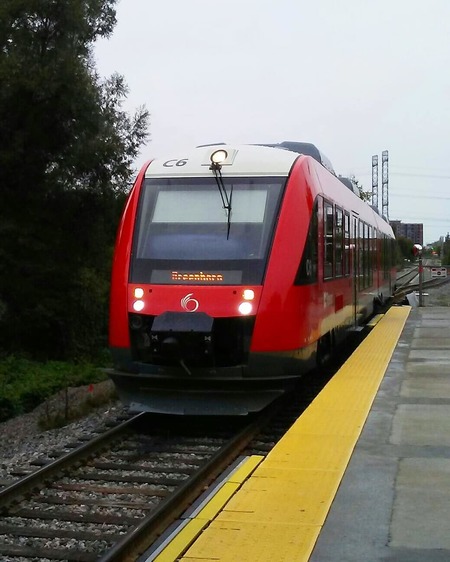
Following the January 2025 reopening with Stage 2 South upgrades, the Trillium Line now operates with Stadler FLIRT diesel multiple units, more modern and reliable than the Coradia LINT trains it used in earlier years. The line connects Bayview interchange (where it meets Line 1) with the city's southern areas, passing through Carleton University, the Mooney's Bay recreational area and the new Riverside South neighbourhoods.
Line 4 — Airport Shuttle
Line 4 is the system's shortest branch: 4 km from South Keys to the terminal of Ottawa Macdonald-Cartier International Airport (YOW), with three stations: South Keys, Uplands and Airport. It opened January 6, 2025, filling a long-standing gap — Ottawa had been one of the few Western capitals without a direct rail link to its main airport.
Using it requires a transfer: from downtown, take Line 1 then transfer to Line 2 at Bayview, ride to South Keys, then board Line 4. More steps than expected, but the connection works. Total travel time from Rideau to the airport is approximately 35–45 minutes depending on connections.
Stations in detail
Line 1 — Key stations
| Station | Area / Neighbourhood | Main interest |
|---|---|---|
| Tunney's Pasture | West Ottawa | Western terminus, large bus hub, federal government offices |
| Bayview | LeBreton Flats | Transfer to Line 2, Ottawa River views, redevelopment zone |
| Pimisi | LeBreton Flats | LeBreton Flats future development, Canadian Museum of History access |
| Lyon | Downtown (underground) | Government office district, Elgin Street |
| Parliament | Downtown (underground) | Parliament Hill, Library of Parliament, War Memorial |
| Rideau | Downtown (underground, deepest) | ByWard Market, Rideau Centre, Notre-Dame Cathedral, historic downtown |
| uOttawa | Sandy Hill / Lowertown | University of Ottawa, Rideau Canal, student district |
| Lees | East Ottawa | Residential area, Ottawa General Hospital |
| Hurdman | East Ottawa | Major bus interchange, Ottawa General Hospital |
| Tremblay | East Ottawa | VIA Rail Ottawa station (intercity trains to Montréal, Toronto) |
| St-Laurent | East Ottawa | St-Laurent Shopping Centre, suburban east |
| Cyrville | East Ottawa | Residential east Ottawa |
| Blair | Orleans / East Ottawa | Eastern terminus, major regional bus hub, Orleans gateway |
Line 2 — Key stations
| Station | Area | Main interest |
|---|---|---|
| Bayview | LeBreton Flats | Transfer with Line 1, northern terminus |
| Carling | Centretown West | Carling Avenue corridor, Dow's Lake nearby |
| Carleton | Carleton University campus | Carleton University, academic campus |
| Mooney's Bay | Riverside Park / Alta Vista | Hog's Back Park, Vincent Massey Park, Rideau River, recreation |
| Walkley | South Ottawa | New 2025 station, south Ottawa residential |
| Corso Italia | South Ottawa | New 2025 station, Italian heritage neighbourhood |
| South Keys | South Ottawa | South Keys Shopping Centre, transfer to Line 4 (airport) |
| Riverside South | Riverside South | Growing suburban neighbourhood |
| Limebank | Riverside South | Southern terminus of Line 2 |
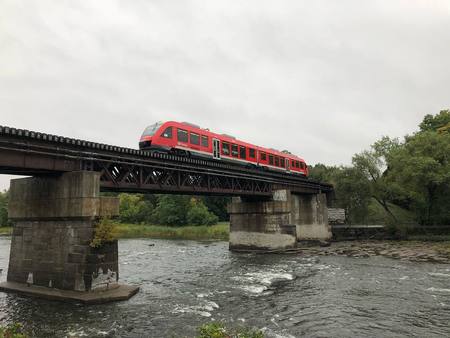 Carleton University — served by the Carleton station on the Trillium Line
Stage 2 — The great expansion
Stage 2 was approved in March 2019 at a budget of $4.66 billion CAD. It has three components — one already complete, two still under construction:
South Extension — completed (January 2025)
Extended the Trillium Line south to Limebank, adding stations at Riverside South and two infill stops (Walkley and Corso Italia) in the northern corridor. Also included the construction of Line 4 to the airport. Around 6 new stations now in service.
East Extension — under construction (expected Q2 2026)
Extends Line 1 from Blair east through the Orleans district to the Trim Road area. Five new stations, covering one of Ottawa's fastest-growing suburban corridors. When complete, the Confederation Line will reach 24.5 km.
West Extension — under construction (expected Q3 2027)
The most complex component. Extends Line 1 west from Tunney's Pasture to Algonquin College and Moodie Drive — 15 km with 11 new stations, including 3 km of cut-and-cover tunnel. At Lincoln Fields, the line splits: one branch continues as Line 1 to Algonquin College, while a new Line 3 heads to Moodie Drive. When complete, the O-Train network will have 64.5 km and 41 stations.
Stage 3 — under study
Two further extensions are in preliminary planning: the Kanata Extension (11 km west to Hazeldean Road, 8 stations) and the Barrhaven Extension (10 km south to Barrhaven Town Centre, 7 stations). Opening dates are not expected before 2031 and depend on federal and provincial funding.
Rolling stock
Alstom Citadis Spirit (Line 1)
The most visible trains in the system. Alstom built 72 units for Ottawa with 27% Canadian content, assembled in Hornell (New York), Sorel-Tracy (Quebec) and Ottawa. Each unit is 48.4 metres long, carries 300 passengers and has a maximum speed of 105 km/h (capped at 80 km/h in operation).
The history of these trains in Ottawa has been turbulent. Problems started almost immediately after the 2019 opening: door failures (October 2019), heating deficiencies (December 2019), wheel cracks caused by a misaligned manufacturing screw (July 2020), a major derailment linked to axle bearing assembly faults (August 2021), further bearing failures (July 2022 and 2023), and spalling in cartridge bearings (January 2026). The disputes between Alstom, the RTG consortium and OC Transpo over warranties and responsibilities were a constant source of tension for years.
Stadler FLIRT (Lines 2 and 4)
The Swiss Stadler FLIRT (Flexible Light Innovative Rail Train) diesel multiple units are the vehicles for the Trillium Line and Airport Shuttle since 2025. More compact than the Citadis, designed for single-track operation with passing sidings, they are valued for reliability and efficiency on regional light rail networks. The Trillium Line previously used Bombardier Talent trains (2001–2015) and later Alstom Coradia LINT 41 units.
Schedules and frequencies
| Line | First train | Last train | Peak frequency | Off-peak / weekend |
|---|---|---|---|---|
| Line 1 (Confederation) | Mon–Fri ~05:00 / Sat ~06:00 / Sun ~07:00 | ~01:00 | ~3–5 min | ~8–10 min |
| Line 2 (Trillium) | Mon–Fri ~06:00 | ~23:30 | ~15–20 min | ~20–30 min |
| Line 4 (Airport) | ~06:00 | ~23:00 | ~20 min | ~30 min |
Always check OC Transpo's website or the Transit app for current schedules before travelling. Ottawa's extreme winters (temperatures can drop to –25°C or below) can cause delays and service disruptions. Line 1's underground stations are fully climate-controlled year-round — a practical comfort in January.
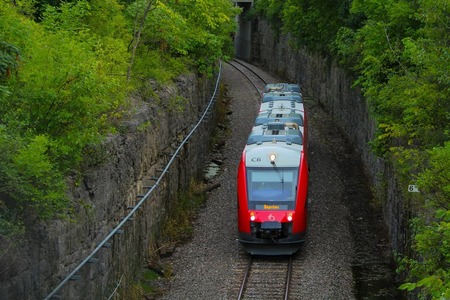 Carling station on the Trillium Line
Fares and the Presto card
O-Train payment is fully integrated with the OC Transpo bus network — the same ticket covers trains and buses with unlimited transfers within the fare period.
| Fare type | Approx. price | Notes |
|---|---|---|
| Single adult ride (Presto) | ~$3.80 CAD | Standard Presto fare |
| Single adult ride (cash) | ~$4.80 CAD | Cash surcharge applies |
| Day Pass | ~$11 CAD | Unlimited travel for one day |
| Family Day Pass (up to 6 people) | ~$11 CAD | Valid on Saturdays, Sundays and holidays only |
| Monthly adult pass | ~$134 CAD | Unlimited travel for one month |
| Under 13 years old | Free | With a fare-paying adult |
The Presto card is Canada's equivalent of London's Oyster card or Paris's Navigo. It works across Ontario (Toronto, Hamilton, GO Transit, etc.) and can be topped up at station machines, online or at authorised retailers. For anyone staying in Ottawa more than two or three days, a Presto card is clearly worth it. The system includes capping: if you take enough trips in a day, the system automatically applies the Day Pass price and stops charging.
Airport travel: Line 4 has no premium fare. The standard single ticket or monthly pass covers the full journey from anywhere on the O-Train to the airport, including all transfers.
How to use the system
Validation happens before boarding, not inside the train. At stations with fare gates (mainly the Line 1 underground stations), tap your Presto card at the reader on entry. At Trillium Line surface stations, control is mixed: there are card readers on platforms and fare inspectors checking tickets on board. Don't assume that no fare gate means no control: fines for travelling without a valid ticket are substantial.
The most useful apps for planning trips in Ottawa are Transit (excellent real-time tracking) and Google Maps (good for combined rail-bus journeys). OC Transpo's own app is functional but historically less intuitive. For service alerts — important in a system that has had frequent disruptions — follow @OCTranspo or enable push notifications in the app.
Airport connection (YOW)
Line 4 connects the airport directly to the O-Train network. South Keys to Airport terminal takes about 6–8 minutes with three stops. The connection from downtown is not direct: combine Line 1 + transfer at Bayview + Line 2 + transfer at South Keys + Line 4. Total from Rideau to airport: approximately 35–45 minutes.
For travellers without heavy luggage, this is a convenient and affordable option (just the standard single fare). For those with bulky bags or tight schedules, taxis and rideshare services are available outside the terminal 24 hours a day. Given the multi-transfer requirement, many visitors with luggage still opt for a taxi or Uber for airport transfers.
Accessibility
Line 1's underground stations (Lyon, Parliament, Rideau) have elevators from street to platform. Surface stations on Lines 1, 2 and 4 have level boarding or accessible ramps. The Citadis Spirit and Stadler FLIRT trains feature low floors, dedicated wheelchair spaces and priority seating for elderly or disabled passengers.
Para Transpo is OC Transpo's door-to-door adapted transit service for people who cannot use regular transit. Registration and advance booking are required. During Stage 2 construction, some station entrances may be temporarily modified — worth checking accessibility routes before planning a trip that depends on a specific elevator.
Safety
Safety perception on the O-Train has been shaped more by service disruptions and technical failures than by serious crime. Stations have security cameras, modern lighting and staff presence during busy hours. The underground Line 1 stations feel monitored and controlled. Surface Trillium Line stops, particularly at night, feel more open.
As with any North American medium-city transit system, basic precautions apply: stay in well-lit areas late at night, keep luggage visible, and use emergency intercoms if needed. Serious crime on the system is low compared to large-city metros like Toronto or Montréal.
Bikes, pets and luggage
Bicycles are allowed on the O-Train during off-peak hours. Trains have designated bike spaces. On Line 1, bike access may be restricted during peak hours based on train occupancy. Check current rules at octranspo.com before travelling. Standard luggage and strollers are well accommodated at most stations.
Integration with OC Transpo buses
The O-Train is not a standalone system: it is the rail spine of a transport network that relies heavily on buses to reach all parts of Ottawa. Major O-Train stations — Tunney's Pasture, Blair, Hurdman, South Keys — are large interchanges where dozens of bus routes converge. An OC Transpo pass covers both trains and buses without additional charge, making rail+bus the standard way Ottawa residents get around.
For visitors, this means that if your destination is not within easy walking distance of an O-Train station, there will almost certainly be a bus completing the journey. The Transit app shows rail-bus connections clearly and in real time.
 South Keys area — transfer point between Line 2 and Line 4
The O-Train and Ottawa's winters
Ottawa has one of the harshest winters of any world capital. Temperatures can drop to –25°C or colder for weeks at a time. Snow and ice affect infrastructure, platforms and operations. In principle, the O-Train operates year-round with snow removal equipment and heated facilities — though Citadis Spirit's heating deficiencies in the first winter of Line 1 operations (2019-2020) were one of the earliest problems identified.
In practice, winter adds unpredictability. Always check OC Transpo service alerts before depending on the O-Train for tight connections in January or February. The underground Line 1 stations are fully climate-controlled — Lyon, Parliament and Rideau offer real shelter on extreme cold days.
Urban impact
The O-Train's impact on Ottawa's urban development is already visible, if still early. The LeBreton Flats area — a large former brownfield site adjacent to Bayview and Pimisi stations near downtown — has long been the subject of development debates. Rail connectivity is a key factor in any project that moves forward there.
Along the eastern Line 1 corridor, residential development around St-Laurent, Cyrville and Blair has increased. The same is true along the Trillium Line south, where Riverside South and Limebank represent expanding residential neighbourhoods made more accessible by the train. Ottawa is transitioning — slowly — from a car-dependent city to one where rail transit organises part of its growth. The car remains dominant, but the shift is real and irreversible.
Most useful stations for tourists
| Station | What to visit nearby | Line |
|---|---|---|
| Rideau | ByWard Market, Rideau Centre, Notre-Dame Cathedral, historic downtown | Line 1 |
| Parliament | Parliament Hill, Library of Parliament, Canadian War Museum, War Memorial | Line 1 |
| Pimisi | Canadian Museum of History (across the river in Gatineau), LeBreton Flats | Line 1 |
| Lyon | Elgin Street restaurant district, National Arts Centre, War Memorial | Line 1 |
| uOttawa | University of Ottawa, Rideau Canal, student area | Line 1 |
| Tremblay | VIA Rail Ottawa (intercity trains to Montréal, Toronto) | Line 1 |
| Mooney's Bay | Vincent Massey Park, Rideau River, recreational area | Line 2 |
| Carleton | Carleton University campus, quiet academic environment | Line 2 |
Fun facts and curiosities
The name O-Train was coined by the advertising agency Acart Communications, playing on Duke Ellington's jazz standard "Take the 'A' Train" — adapted to work bilingually in both English and French. Very few transit systems in the world owe their name to jazz.
The original Trillium Line, opened in 2001, cost just $21 million Canadian. It was a deliberately low-cost experiment: three secondhand trains on a repurposed freight line. Nobody imagined it would become the seed of a three-line, 35+ km network.
Rideau is probably the deepest station in the O-Train system and one of the most visually impressive. Its subterranean spaces and proximity to the Rideau Canal UNESCO World Heritage Site make it architecturally singular.
Ottawa was for decades considered the world's best large-scale example of BRT. The shift to rail has been a quiet revolution: the number of buses circulating through the downtown has fallen dramatically since 2019.
When Stage 2 is complete, Ottawa will have 77% of its residents living within 5 km of an O-Train station — one of the highest per-capita rail coverage figures among North American mid-sized cities.
International comparisons
The O-Train resembles systems like Vancouver's SkyTrain (in its ambition, though less automated) or Charlotte's LYNX Blue Line more than the heavy metros of Toronto or Montréal. The mix of electric and diesel technologies on an integrated-fare network brings it close to certain European tram-train models, though with different infrastructure characteristics.
The Confederation Line's story — ambitious project, rushed opening, serious technical problems, public inquiry — has international parallels in systems like Montréal's REM (which also had launch difficulties) or Edinburgh Trams (with its historic delays and cost overruns). Complex rail projects routinely go through a difficult first period before stabilising. Ottawa's is at the sharper end of that spectrum.
Frequently asked questions
Does the O-Train go directly to Ottawa Airport?
Yes. Line 4 (Airport Shuttle) connects South Keys station with the terminal of Ottawa Macdonald-Cartier International Airport (YOW). From downtown, the journey requires connecting Line 1 with Line 2 and then Line 4, with a total time of approximately 35–45 minutes from Rideau. The standard OC Transpo fare covers the full journey with no surcharge.
How many lines does the O-Train have?
Three active lines: Line 1 (Confederation Line, electric, east-west), Line 2 (Trillium Line, diesel, north-south) and Line 4 (Airport Shuttle, diesel, South Keys to airport). With Stage 2 extensions, a new Line 3 (western branch) will also open in 2027.
How much does an O-Train ticket cost?
With the Presto card, an adult single fare is approximately $3.80 CAD . Cash payment carries a significant surcharge. A monthly adult pass costs around $134 CAD . Fares are reviewed periodically — check the current prices at octranspo.com before travelling.
Which station is most useful for tourists?
Rideau is the most central and useful: it gives direct access to the ByWard Market, Rideau Centre and the historic downtown. Parliament serves Parliament Hill. For the national museum district near the Rideau Canal, the uOttawa–Lees area also works well. A day pass and Line 1 will handle most of Ottawa's key tourist sites.
What is Stage 2 and when will it be finished?
Stage 2 is the major O-Train expansion approved in 2019. The South Extension (Trillium Line to Limebank + Line 4 airport link) is already complete since January 2025. The East Extension of Line 1 to Orleans is expected in Q2 2026. The West Extension (to Algonquin College and new Line 3) is expected in Q3 2027. When complete, the network will have 64.5 km and 41 stations.
Does the O-Train run normally in winter?
Yes, the O-Train operates year-round. Ottawa's extreme winters can cause delays and occasional service disruptions, but the system runs. Line 1's underground stations are fully climate-controlled. Check OC Transpo service alerts on heavy snow or extreme cold days before planning time-sensitive journeys.
What was the OLRTPI and what did it find?
The Ottawa Light Rail Transit Public Inquiry was an independent inquiry commissioned by the Ontario government in 2022 following the Confederation Line's technical failures. The 2023 final report found that political pressure led to an early opening despite unresolved technical issues, that oversight of integration and testing was inadequate, and that the organisational culture prioritised schedule over safety. It is one of the most transparent analyses of public infrastructure governance Canada has published.
Video
Update history
- May 2026 — Full rewrite: Line 1 (2019), Line 2 reopening (2025), Line 4 airport (2025), Stage 2, Citadis Spirit and Stadler FLIRT rolling stock, the public inquiry controversy, Stage 3
- 2018 — Fares and general data update (original article)
- 2011 — Article created (1 line, 5 stations)